 BeDRY
BeDRY
This case is fictional. It is constructed by Dr. Slaven Abdović from common presentations seen in an incontinence clinic. The screenshots use diaries created specifically for these examples; no real patient data is used. Any resemblance to a real person is entirely coincidental. The interpretation reflects his clinical experience alongside published guidelines. The example is educational and not a substitute for assessment by your own doctor.
In short
- An 18-year-old with urgency, especially after coffee, cola, or orange juice. But the problem that actually bothers him is different: after almost every visit to the toilet, urine dribbles onto his underwear or trousers leaving an embarrassing coin-sized spot.
- The diary showed good bladder capacity and no signs of overactivity, but also very long intervals between urination, substantial evening drinking and high night-time urine production.
- Ultrasound after urination had also shown residual urine, making bladder-emptying habits particularly important in this case.
- Checkpoint helped bring these findings together, while Coach gave him practical video guidance to work on at home — including when to urinate and specific techniques for more complete emptying and post-void dribble.
Why this case is here
Post-void dribble can seem like a small problem, but when it happens after almost every visit to the toilet it can become frustrating and embarrassing. From clinical perspective, dribble in males is usually a problem of incomplete bladder emptying. However, the symptom alone does not exclude other causes, such as small bladder or overactive bladder, especially if urgency is manifested. A diary can show how often someone urinates, how long they wait, how much the bladder holds, and how drinking is distributed through the day.
This case also shows that BeDRY is not only for younger children. Adolescents can keep their own diary, understand their habits with Checkpoint, and use Coach for practical guidance themselves.
What he described
Urgency appears occasionally, and he has noticed that it tends to follow coffee, cola or orange juice. Before a long trip he makes a point of going to the toilet, and once urgency starts he no longer waits because he has had a few urge leaks.
But that is not what actually bothers him. After almost every visit to the toilet, once he has finished and dressed, a drop or more of urine appears on his underwear or trousers - a coin sized spot. Sometimes it is enough to be noticeable, and it has become a constant irritation.
What the diary showed
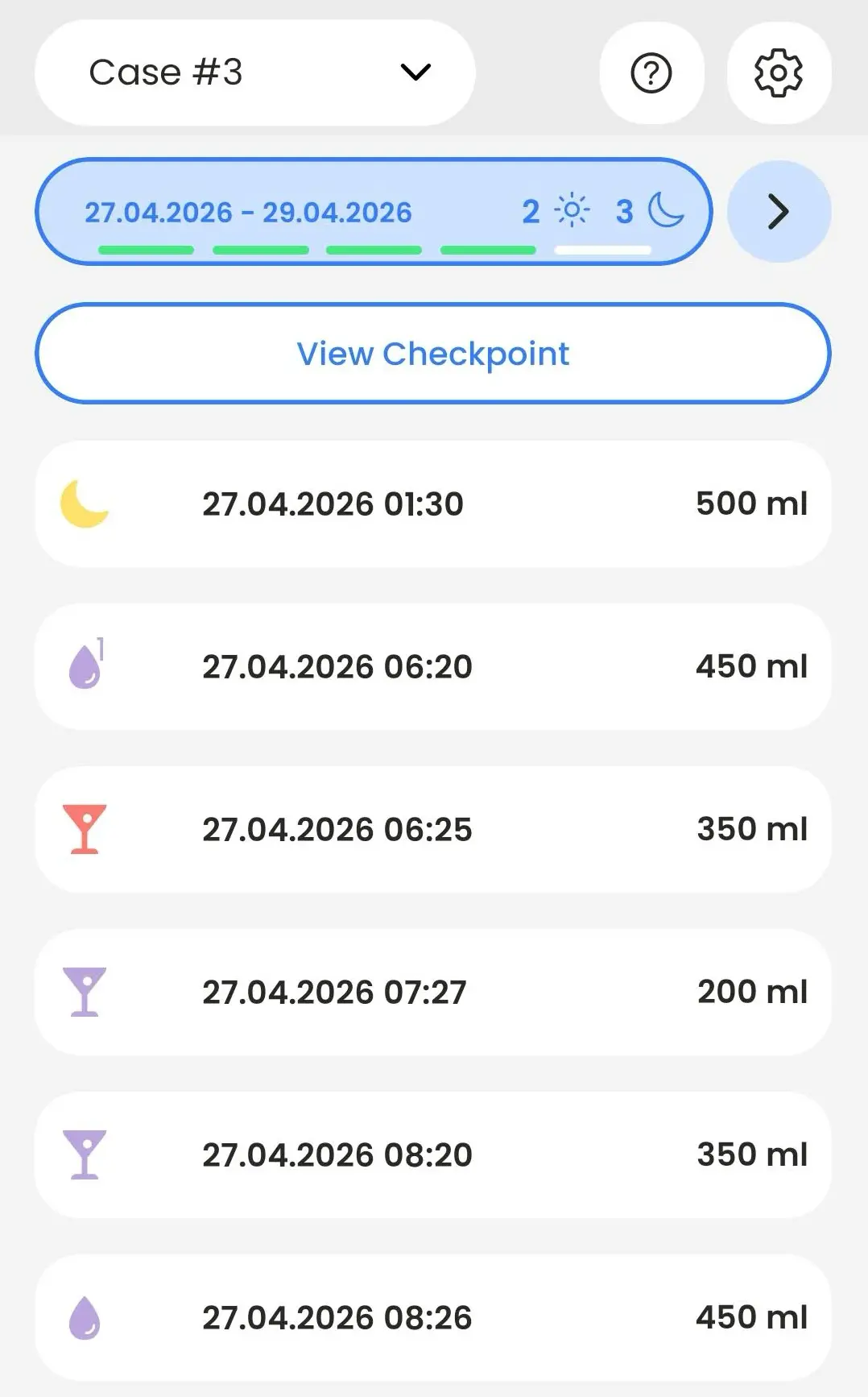
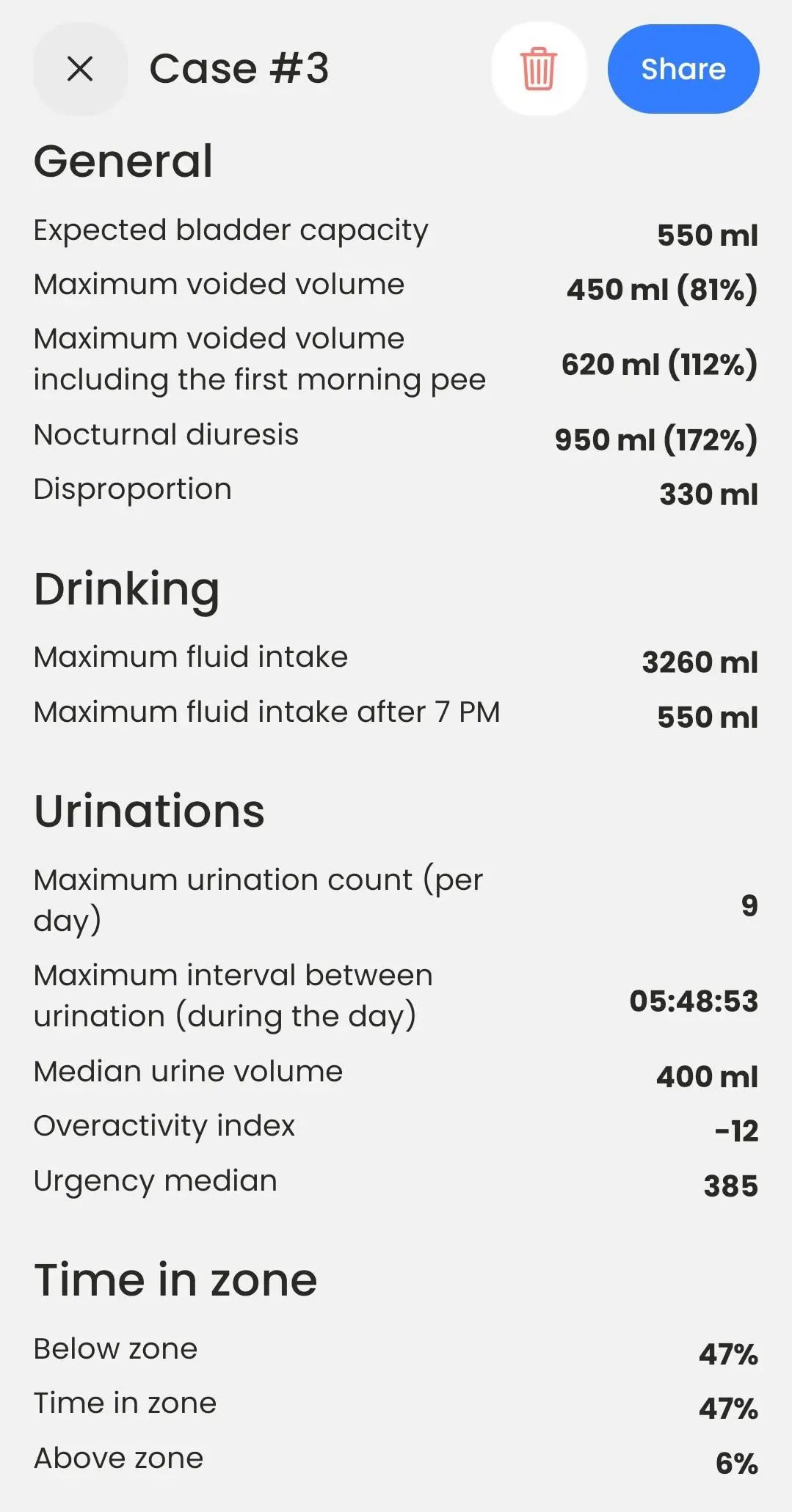
| Expected bladder capacity | 550 ml |
| Largest measured void | 450 ml (81%) |
| Largest void including first morning pee | 620 ml (112%) |
| Night-time urine production | 950 ml (172%) |
| Mismatch between the two | 330 ml |
| Total daily fluid intake | 3260 ml |
| Fluid intake after 7 PM | 550 ml |
| Voids per day | 9 |
| Longest daytime interval between voids | 5 h 48 min |
| Overactivity index | −12 |
The diary shows that bladder capacity is not the obvious problem. His largest measured urination volume was 450 ml, and the first morning void reached 620 ml. What stands out instead are some of his habits: daytime intervals stretch to almost six hours, 550 ml is still being drunk after 7 PM, and night-time urine production is high. His overactivity index is −12, within the normal range.
These measurements give Checkpoint much more to work with than the symptom a few drops after peeing alone.
What Checkpoint highlighted
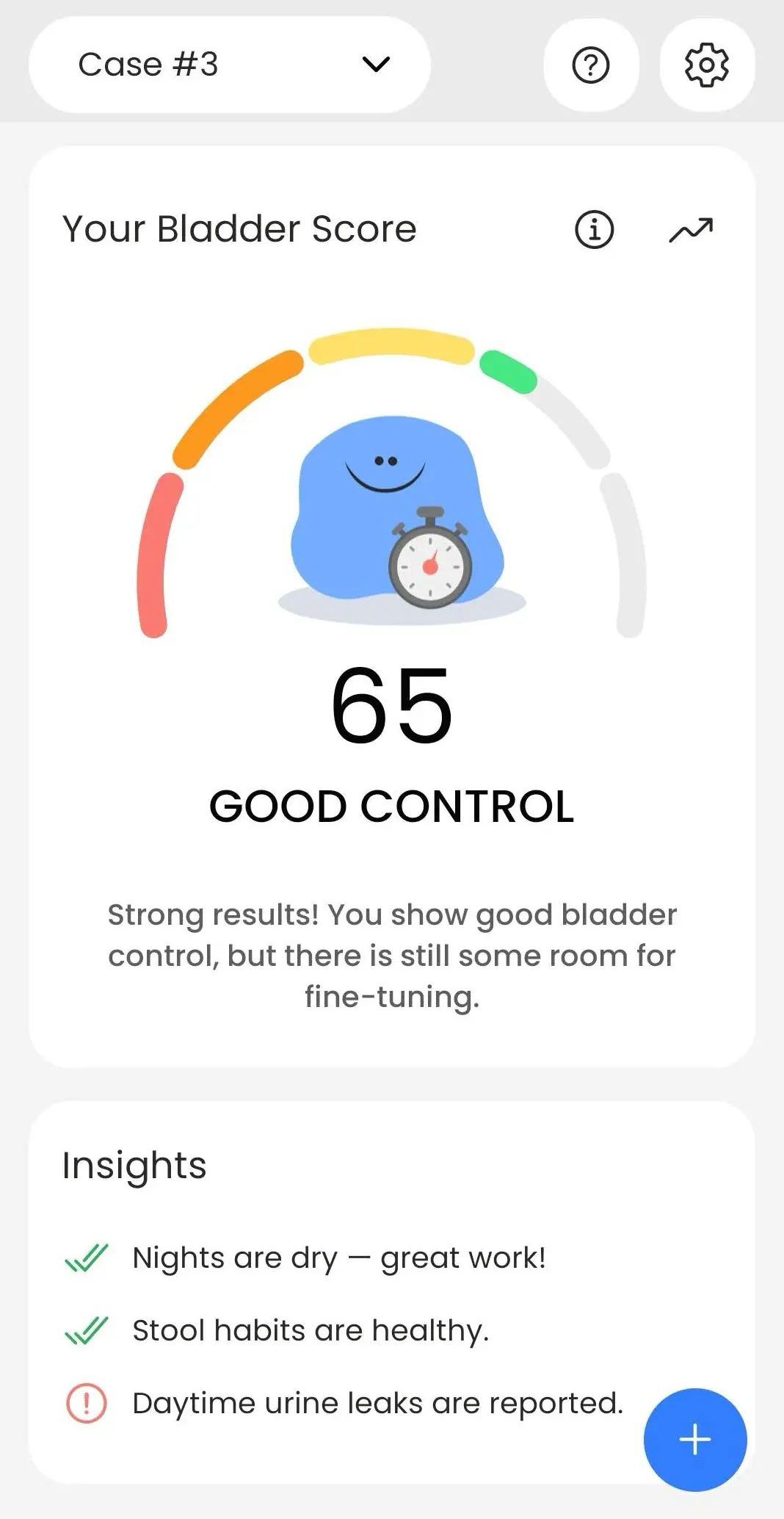
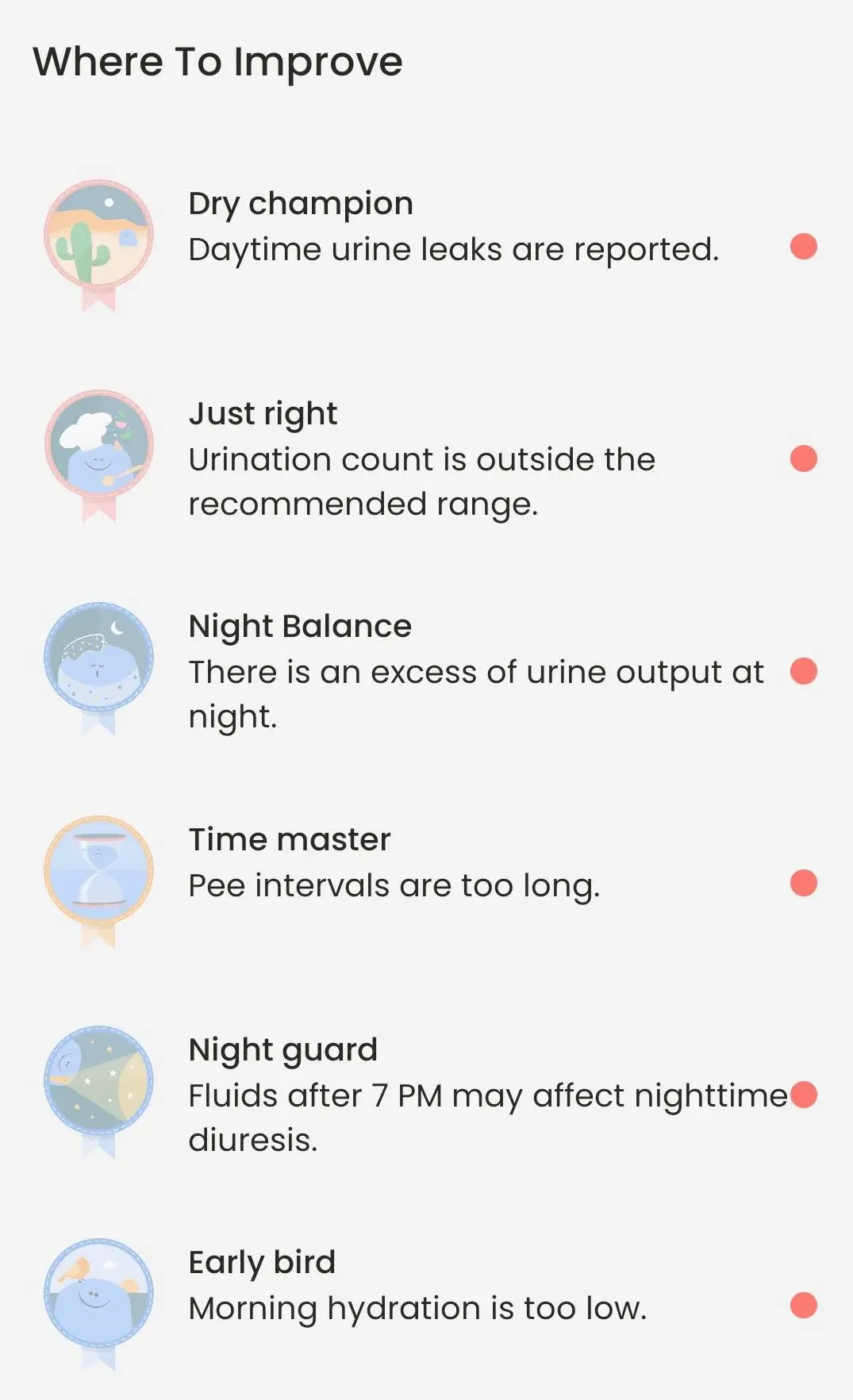
His Bladder Score is 65, reflecting many things that are already going well: dry nights, healthy bowel habits and good bladder capacity. The Insights then show where attention may be useful — particularly long intervals between urination, evening fluids, high night-time urine production and very little morning hydration.
What Coach suggested
The training plan follows directly from the habits Checkpoint highlighted. On drinking, it sets about two litres a day, distributed as roughly 700 ml by noon, 700 ml by 4 PM and 700 ml by 7 PM, with the aim of moving more of his drinking earlier in the day.
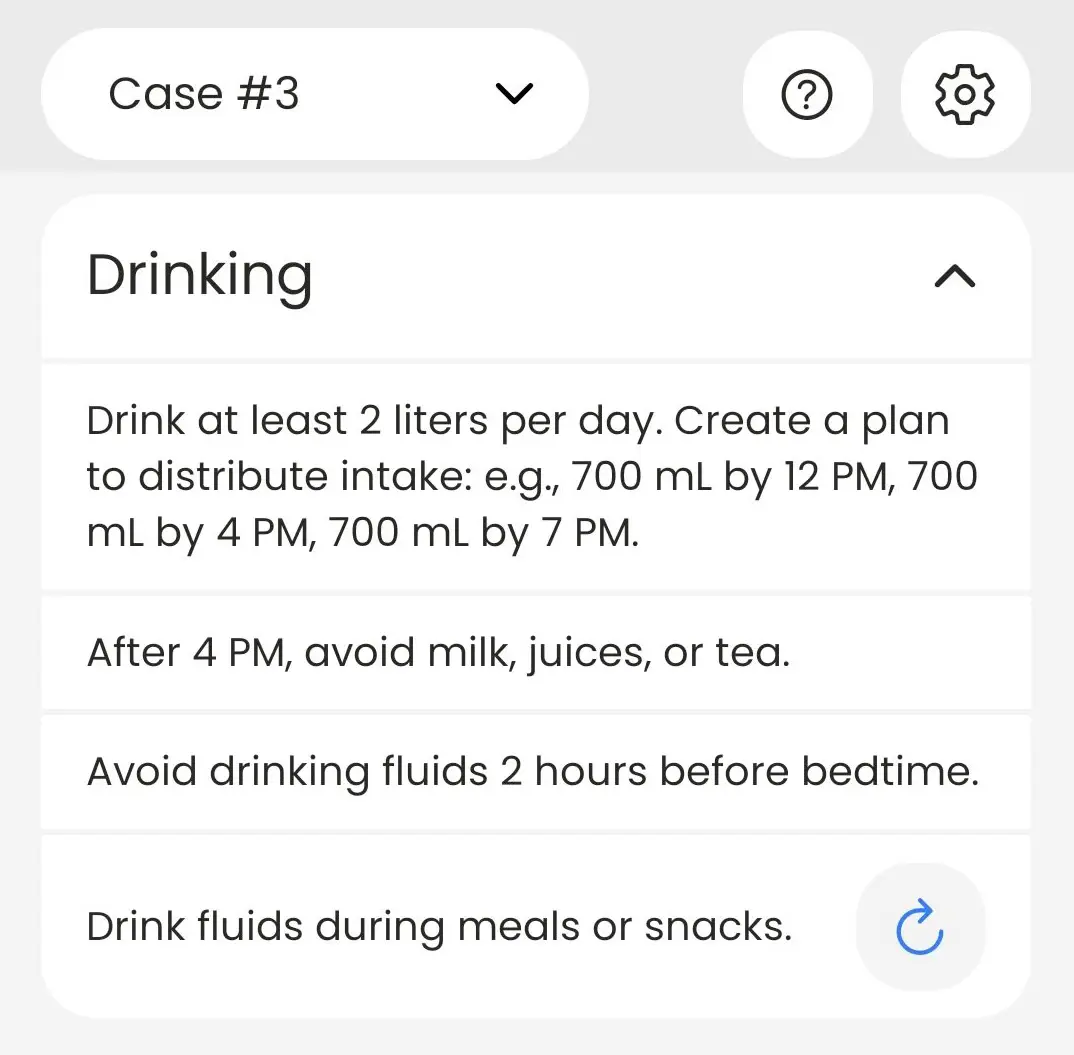
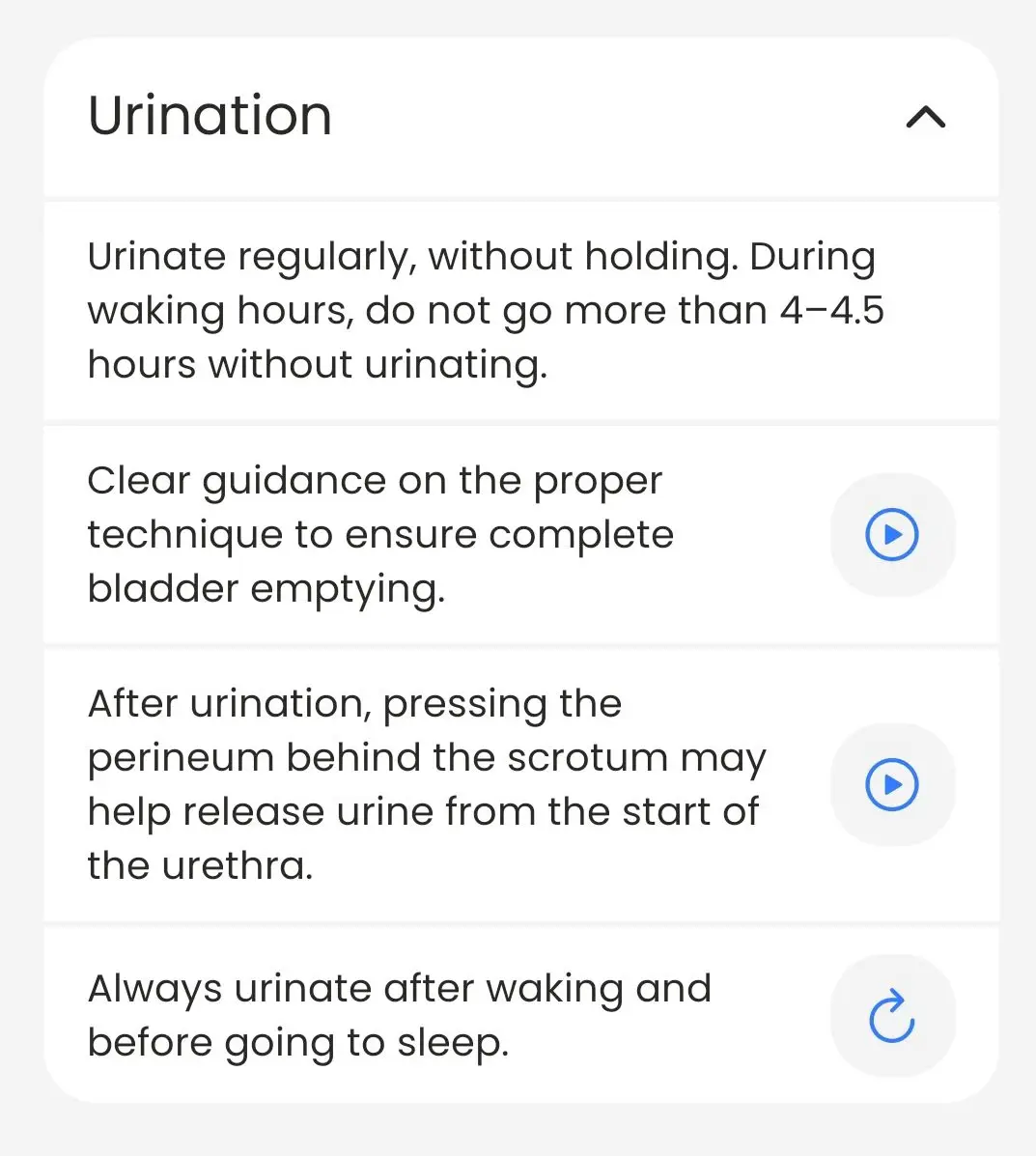
On urination, Coach recommends not letting the interval stretch beyond about four to four and a half hours. For him, that means going before he feels he absolutely needs to, rather than routinely waiting for five or six hours.
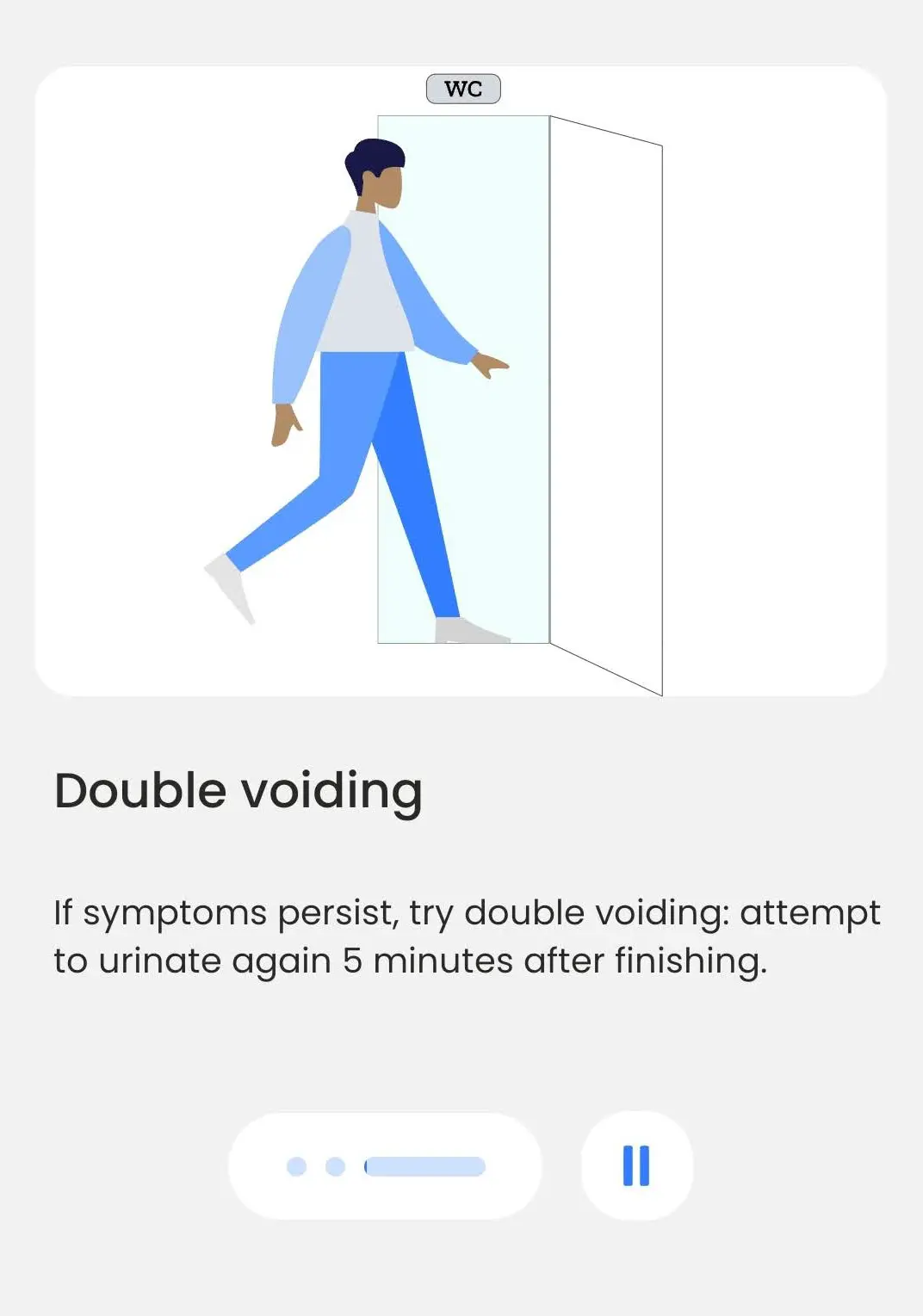
For the post-void dribble itself, Coach provides step-by-step video guidance. It shows techniques for emptying more completely and how to release urine that can remain in the urethra after urination and appear on the underwear only after he has dressed.
When to escalate
Habit changes have their limits. If post-void dribble continues despite carefully following the emptying techniques, it should be discussed with a urologist so that anatomical or other causes can be excluded. A diary and healthier bladder habits are a useful place to start; they do not replace an examination when a persistent symptom needs one.
For you — and for your doctor
Keeping the diary with BeDRY gives him a clearer picture of his own bladder habits. Checkpoint helps him understand what stands out, while Coach turns those findings into practical steps he can work on himself at home.
If the dribble continues and he sees a urologist, he can also share the Summary directly from the app. Instead of describing the problem from memory, he can bring measured bladder capacity, voiding intervals, fluid intake and night-time urine production with him. The consultation starts with a much clearer picture of what has actually been happening.
Every case here started with a bladder diary. Start with the free BeDRY Bladder Diary. After two days and three nights, Checkpoint helps you understand what you’ve recorded, Coach provides practical steps to follow at home, and Trends helps you see what changes over time.
Get Started — FreeCheckpoint and Coach are educational features, not medical advice. Consult a healthcare professional for medical decisions.
References
- Nieuwhof-Leppink AJ, Hussong J, Chase J, et al. Definitions, indications and practice of urotherapy in children and adolescents: a standardization document of the International Children’s Continence Society (ICCS). J Pediatr Urol. 2021;17(2):172–181. doi:10.1016/j.jpurol.2020.11.006
- Austin PF, Bauer SB, Bower W, et al. The standardization of terminology of lower urinary tract function in children and adolescents: update report from the Standardization Committee of the International Children’s Continence Society. Neurourol Urodyn. 2016;35(4):471–481. doi:10.1002/nau.22751
- Nevéus T, Fonseca E, Franco I, et al. Management and treatment of nocturnal enuresis — an updated standardization document from the International Children’s Continence Society. J Pediatr Urol. 2020;16(1):10–19. doi:10.1016/j.jpurol.2019.12.020
Written, reviewed and explained by Dr. Slaven Abdović, MD, PhD, pediatric nephrologist at Children’s Hospital Zagreb and founder of BeDRY, from his own clinical perspective and experience together with the published guidelines cited above. The case is constructed for teaching and does not describe a real person. Last reviewed 19 August 2026.