You kept the diary. Now understand what it means.
A bladder diary contains valuable information, but it is difficult to understand it without medical knowledge. Checkpoint turns the diary you already have into clear answers — showing what is going well and where better habits may help.
Checkpoint brings these measurements together and explains them in language families can understand.
Record drinking, urination, leaks and stool habits for at least two days and three nights. If some data is unclear, the app will ask for clarification.
How the diary worksCheckpoint brings together urinations, drinking, leaks, bowel habits and presents a current picture of bladder control through Your Bladder Score.
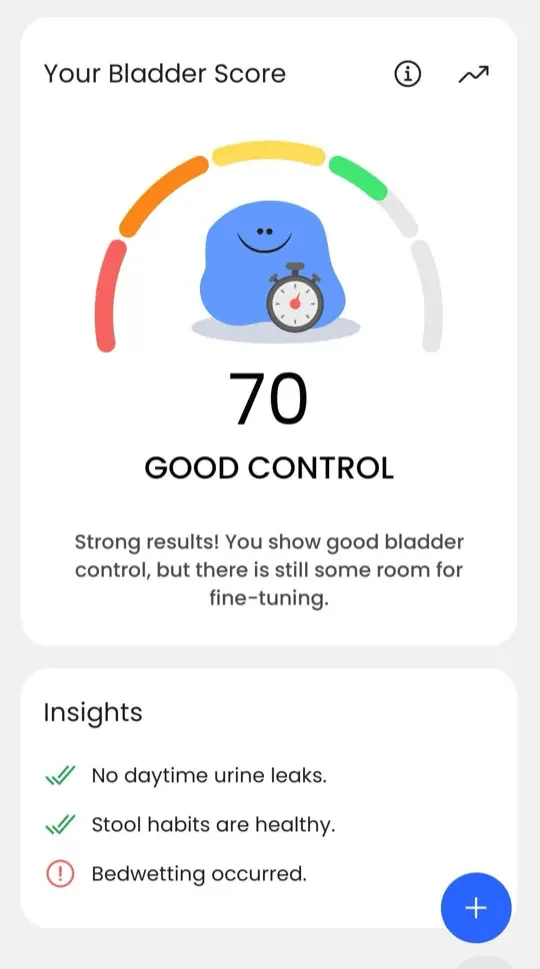
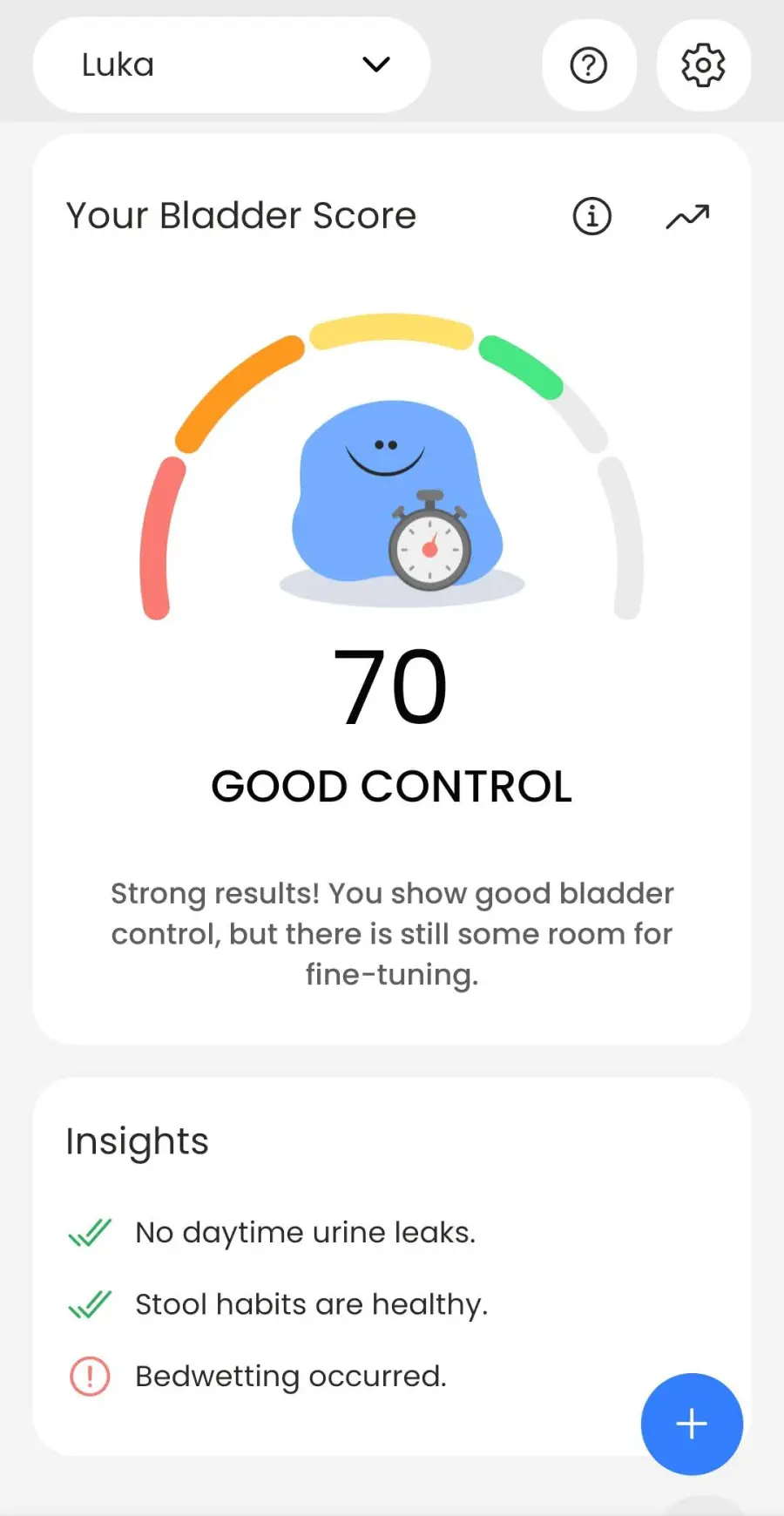
See Your Bladder ScoreBadges and insights explain what shapes your score by highlighting healthy habits and the areas where better routines may improve bladder control.
See the InsightsA 0–100 overview of bladder habits and overall bladder control.
The score summarizes the whole diary into a single number, so a family can see at a glance where they stand — and it is designed to respond to change. Even small improvements in bladder or bowel habits move it, which is what makes progress visible from one Checkpoint to the next.
Checkpoint translates the diary into short explanations — what is already going well, and what deserves attention.
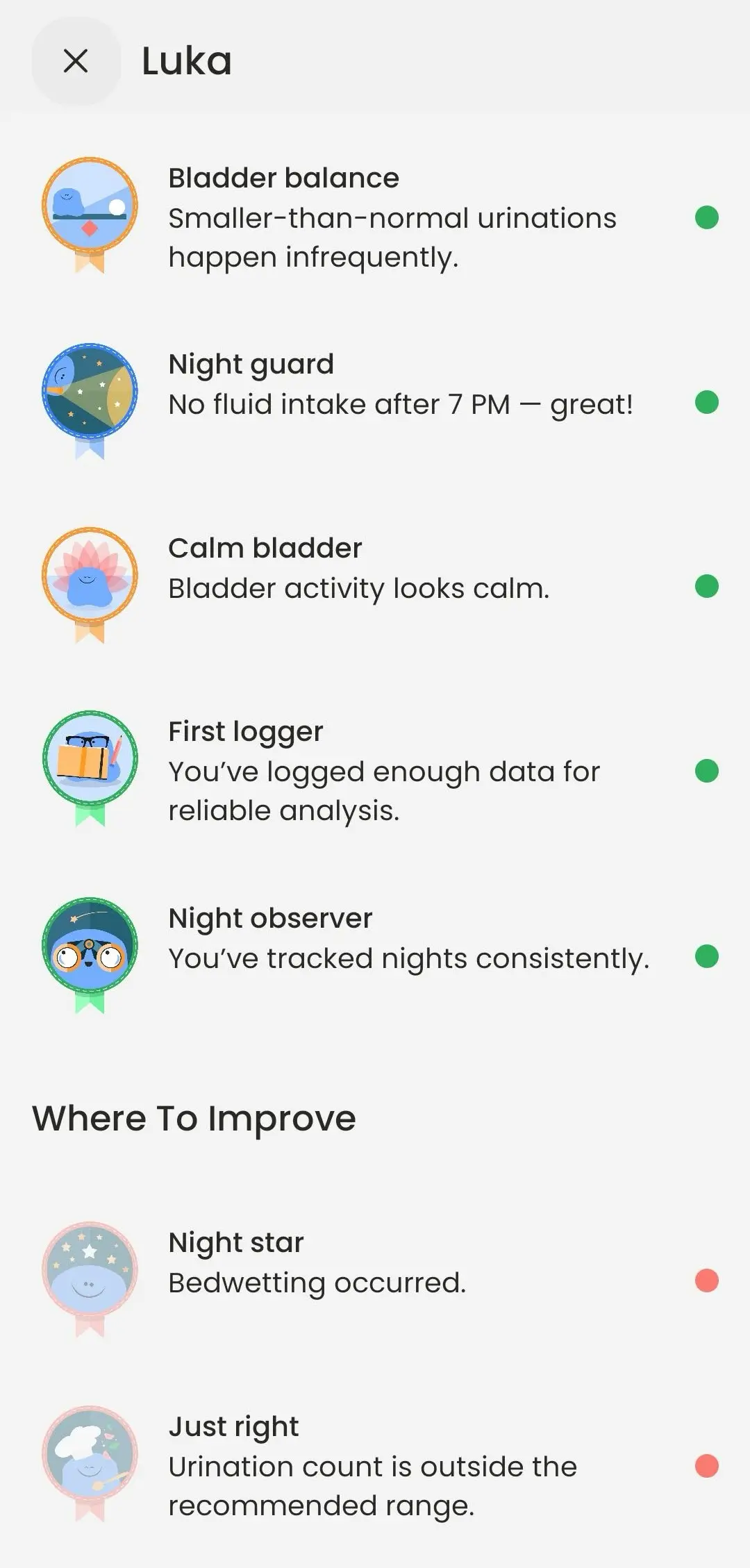
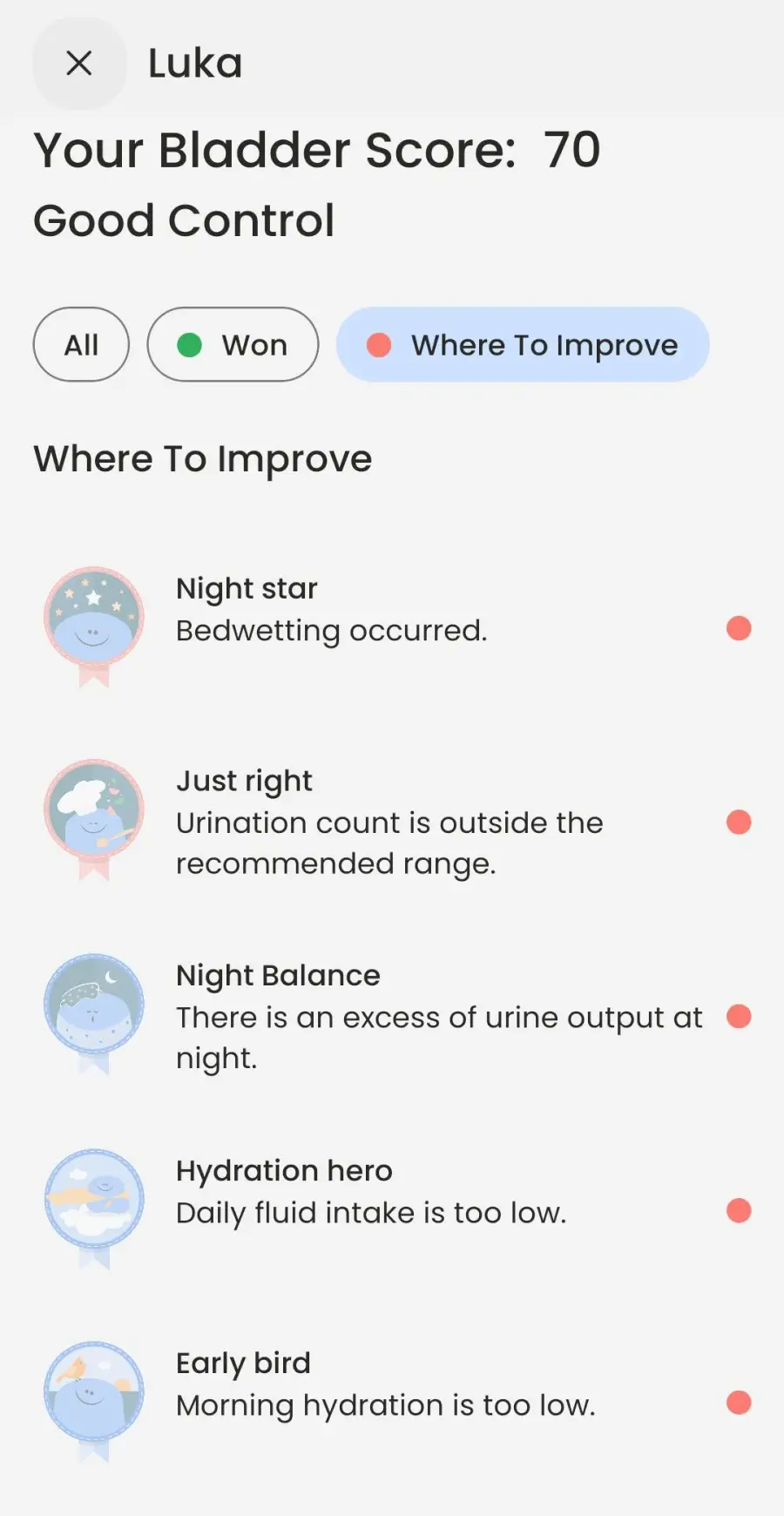
Every habit that shapes the score is listed in plain language, with a green or red marker, and grouped so the wins and the problems are separated. A parent can read the whole picture in under a minute without knowing what “nocturnal diuresis” means.
Badges make individual habits easier to recognize and follow. Each one names a single habit, says whether it is currently won, and explains what would change that.




The illustrations above show a selection of badges. Your Checkpoint includes the complete set, where each badge explains a specific habit, why it matters, and a practical guidance how to build a healthier routine.
Keeping bladder diary, automated Summary and sharing are free.
Same diary. Much easier to understand.
Once Checkpoint shows which habits deserve attention, Coach turns those findings into practical steps for drinking, urination and bowel routines.
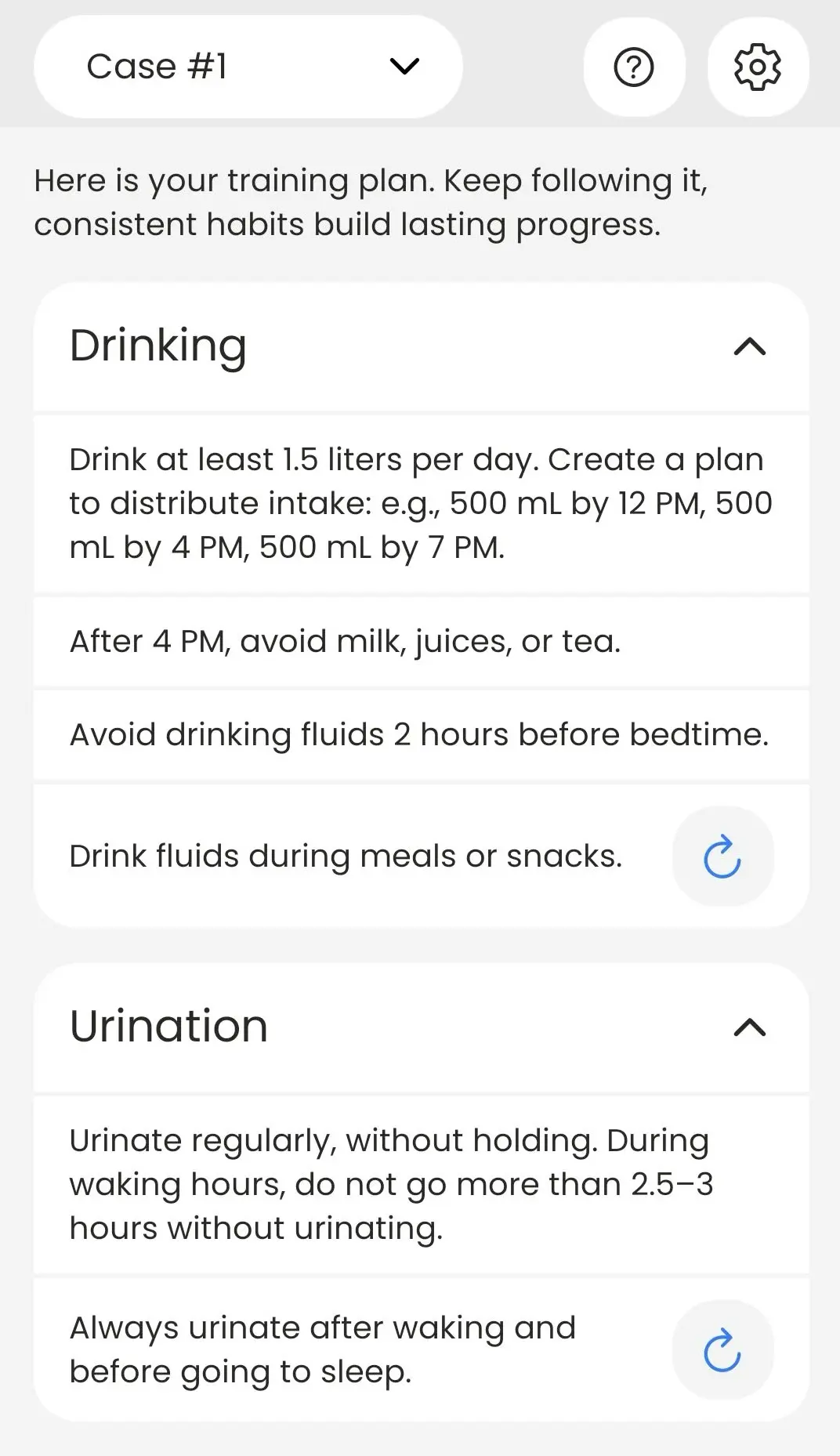
Coach builds the training plan — how much to drink and when, and how often to visit the toilet.
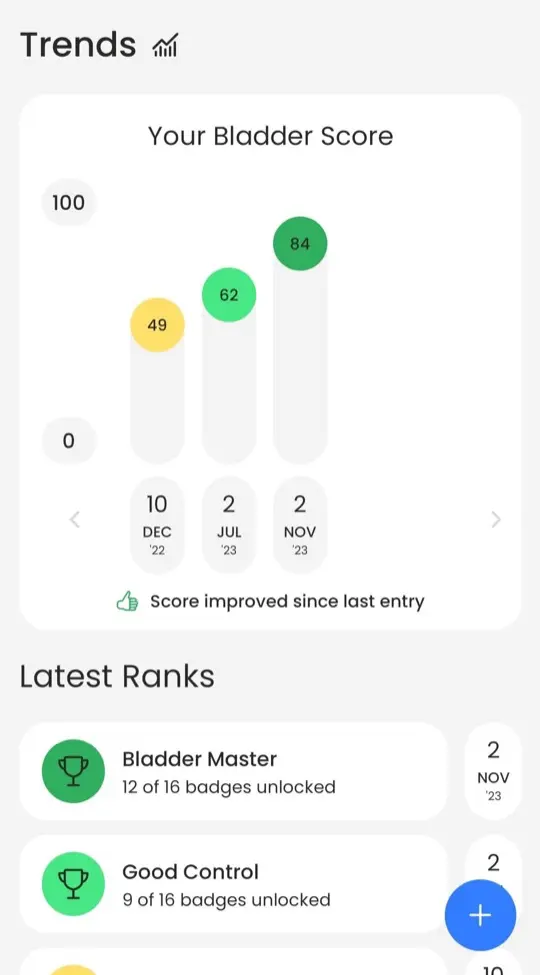
Trends follows the change — each new Checkpoint lands beside the previous ones.
Checkpoint tells you where to look. Coach helps you know what to do next.
Different bladder problems can look similar at first. See how Diary, Checkpoint, Coach and Trends work together in three example situations.
Wet every night since potty training, with no daytime symptoms at all. He sleeps deeply and never wakes.
See how BeDRY workedDry until she was seven, then urgency several times a day and leaks she hides with pads at school. Nights that were dry for years are wet again.
See how BeDRY workedA coin-sized wet spot on his underwear after almost every visit to the toilet. Urgency too, mostly after coffee or juice.
See how BeDRY workedThese are constructed teaching examples written by Dr. Slaven Abdović, not real patients. See all case examples →
Checkpoint was developed by specialists in pediatric nephrology, gastroenterology and urology. It uses established bladder-diary measurements together with BeDRY's structured interpretation of drinking, urination, bladder and bowel habits.
Checkpoint explains what is recorded in your diary. It does not provide a medical diagnosis.
Your Diary and Summary remain free, so you can share the findings with your doctor whenever you need to.
Checkpoint reads the diary you already keep. Nothing to fill in twice.
Complete a new diary and a new Checkpoint whenever you want to check progress. Trends shows how the results change over time.
Unlocks Checkpoint, Coach and Trends for one child profile. Not a subscription.
Bladder Habit Builder — €29Checkpoint and Coach are educational features, not medical advice. Consult a healthcare professional for medical decisions.
 BeDRY
BeDRY